Classic book structures in fantasy books

If you are a plotter, you might be familiar with fantasy book structures. But choosing what type of book structure to go with that helps you tell your story and fits the way you write is another thing entirely.
Classic book structures are not made up things to bring dread into your writing process. They are often tried and true methods that help with driving the plot forward and to keep your pacing within bounds that help the reader to read your books.
One of the more classic books structures you might be familiar with, is the three act structure. This structure has it’s origins in Greek tragedies back in the time of Aristotle. By historical accounts it is reported that the three act structure is based on Aristotle’s drama principles: prologue, episode, stasimon and exodus.
To explain it more simply, a stories narrative should have a beginning, middle and end. Much like academic essays, long-form feature articles and plays. When you’re writing a fantasy book, the sections are expanded exponentially due to the larger wordcount.
Let’s break it down.
Three-Act Structure in fantasy books
Aristotle’s three act structure has evolved somewhat over time, but the main principles of the beginning, middle and end, are still applicable.
The framework, in relation to fantasy book writing, divides the story into setup, confrontation, and resolution. I know what you’re thinking. How are you supposed to squash your world down into three acts? Lucky for you, there is a cover all template that you can work from. And from there, you can break it down even further.
Acts:
Act 1 (Setup): Introduce the hero, world, and stakes. The inciting incident disrupts the status quo.
Act 2 (Confrontation): The hero faces escalating challenges. Subplots and world-building elements develop here.
Act 3 (Resolution): The climax resolves conflicts, followed by denouement.
Editing Tip
Ensure each act has clear goals, rising tension, and resolution.
It is good to remember that this book structure is a guide and might not fit the way you write, or your story. The reason this structure exists is to help you tell your story in a way that readers will undertsand from a historically known structural format. Confusing as hell, but writing is an artform, and one that takes loads of practice to get right.
This structure keeps the plot moving forward and the pacing sharp, while showcasing rich character development and intricate world-building.
As an example, Mistborn by Brandon Sanderson is as close to a textbook example of structured fantasy storytelling that you can get. A word of warning: once you start reading Sanderson’s books, they are highly addictive.
Below is a very minimalistic breakdown on how Sanderson uses the three-act sturcture in Mistborn.
Sanderson’s three-act structure is roughly laid out as follows:
Act 1 (Setup): introduces MC’s harsh life and her recruitment into the rebellion.
Act 2 (Confrontation): follows her training, growing powers, and the rebels challenges against the empire.
Act 3 (Resolution): delivers a climax where the MC confronts the main government and resolves the story’s central conflict.
This structure keeps the plot moving forward and the pacing sharp, while showcasing rich character development and intricate world-building. It’s a textbook example of structured fantasy storytelling.
If you would like to learn more about Sanderson, he has a Youtube channel with some great resources for writer’s, and holds lectures on writing on a regular basis.
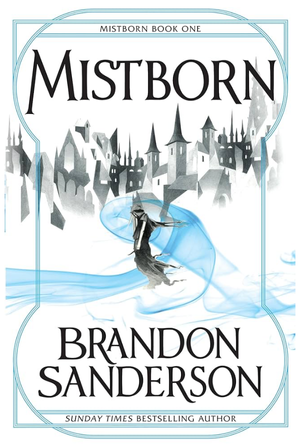
Sanderson’s high fantasy novel set in a world where magic users called Allomancers ingest metals to gain powers. It’s a fascinating take on creating a unique fantasy world. The story itself follows a young thief with latent Allomancer abilities who is planning on overthrowing the worlds Lord Ruler, who is a bit nasty.