
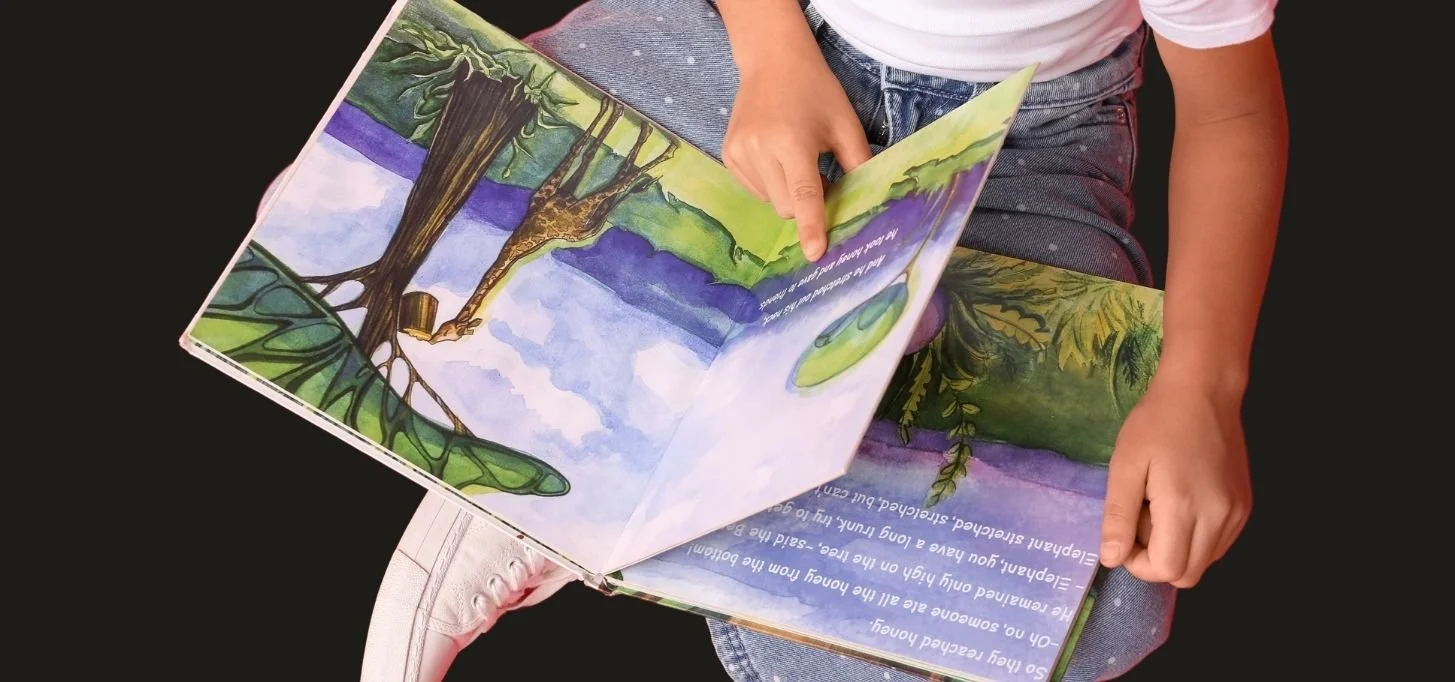
Editing children’s books
Write for the child. Edit for the reader.
Children's books might look simple.
They're not.
A picture book can tell an entire story in 500 words. A middle-grade novel can deal with grief, friendship, identity, fear and growing up. A young adult novel can tackle almost anything — provided it's right for its intended reader.
The challenge is knowing what your particular book needs.
Fae Media edits children's books with an eye on story, age, voice, language, pacing and the relationship between the words and the young reader.
Because writing for children isn't about writing less.
It's about making every word count.
First: who is this book actually for?
Before you edit anything, work out the age of your reader.
Not just “children”.
A four-year-old and a 10-year-old are very different readers.
So are a child reading independently and a child listening to a story at bedtime.
Start with:
Who is the child?
What can they reasonably understand?
What do they find funny, frightening, exciting or interesting?
Is the book being read to them or by them?
Where will they encounter it — at bedtime, at school, alone, with a parent?
What makes them want to turn the page?
And then there's another reader to consider.
The adult.
Parents, carers, teachers, librarians and booksellers are often the people choosing or buying children's books.
Your book has to work for both.
Is your children's book ready?
Before sending your manuscript to an editor, ask yourself a few questions.
Does the story start quickly enough?
Children don't need a story to begin with an explosion.
They do need a reason to keep listening or reading.
Look at the opening. How long does it take before something changes?
Is every word earning its place?
Especially in picture books, word count matters.
If the illustration can communicate something, you may not need to explain it in the text.
And if a sentence isn't doing anything useful, why is it there?
Can the child understand the language?
This doesn't mean you have to use simple or boring language.
Children can understand sophisticated ideas and enjoy unusual words when context gives them meaning.
The question is whether the language serves the story and the intended reader.
Does it sound good aloud?
Even books intended for independent readers benefit from being read aloud during editing.
Listen for repetition, rhythm, awkward sentences, tongue-twisters and places where the energy drops.
If you're writing a picture book, read it aloud. Then read it aloud again.
Preferably to someone who will tell you the truth.
Is there enough room for the illustrations?
In a picture book, the text and artwork should work together.
You don't need to describe every single thing you want the illustrator to draw.
The words and pictures can tell different parts of the story.
Does the ending earn itself?
A children's book doesn't need a moral.
It does need an ending that feels satisfying.
Look at what changes between the beginning and the end. What has the child character discovered, decided, experienced or overcome?
What kind of children's book editing do you need?
Developmental editing
We'll look at the story as a whole: structure, character, pacing, conflict, themes, age suitability and the overall reading experience.
For picture books, we'll also consider how the text leaves room for the illustrations to participate in the storytelling.
Manuscript review
A focused editorial assessment for authors who want to understand what's working and what needs revision.
You'll get practical feedback rather than a vague “this needs more work”.
Picture book editing
Picture books are tiny packages of storytelling.
We'll look at language, rhythm, page-turn opportunities, repetition, character, narrative arc and the relationship between text and illustration.
Chapter book and middle-grade editing
For longer children's fiction, we'll look at character development, plot, pacing, voice, chapter structure, age-appropriate themes and the overall reading experience.
Young adult editing
YA deserves to be treated as its own category rather than simply “children's fiction for older kids”.
We'll consider voice, character, pacing, themes, relationships, genre expectations and whether the manuscript is speaking to its intended reader.
Line editing
For making the prose stronger.
We'll look at clarity, rhythm, voice, repetition, dialogue and the small choices that make a book enjoyable to read aloud or independently.
Copyediting and proofreading
For grammar, punctuation, spelling, consistency and those tiny errors that are particularly noticeable when a favourite book gets read approximately 400 times.
Children's books are not simplified adult books
Children's literature has its own conventions, rhythms and expectations.
The language can be sophisticated.
The ideas can be complex.
The emotions can be enormous.
What matters is whether the book understands its reader.
We won't automatically simplify your writing because it's for children.
We'll look at whether the language, structure and subject matter are right for the age group you're writing for.
What we edit
We work with:
Picture books
Early readers
Chapter books
Middle-grade fiction
Young adult fiction
Children's non-fiction
Educational and activity books
Illustrated children's books
Poetry and verse for children
Genre children's fiction
And books that sit somewhere between categories.
If you're unsure where your book belongs, we'll help you work it out.
The words and pictures need to talk to each other
For illustrated books, editing isn't just about the manuscript.
It's about the relationship between the manuscript and the visual storytelling.
If the text says exactly what the illustration shows, you're potentially wasting words.
If the illustration contradicts the text, you've got a different problem.
The best picture books let the words and images do different jobs.
That's where things get interesting.
Why work with Fae Media?
Because children's books deserve to be taken seriously.
Writing for a young audience doesn't mean writing down to them.
It means understanding them.
We look at the book from several perspectives: the child reading it, the adult reading it aloud, the person buying it and the publisher considering it.
Most importantly, we look at the story.
Is it engaging?
Is the voice distinctive?
Does the pacing work?
Does the ending satisfy?
Will someone want to read it again?
Because with children's books, “again” is a pretty important word.
How it works
01 — Tell us about your book
Send us your manuscript and tell us the intended age range, where you are in the publishing process and what you think the book needs.
If you already have illustrations or a book dummy, we'd love to see those too.
02 — We assess it
We'll look at the manuscript and recommend the most useful type of editorial support.
03 — We talk
We'll discuss your goals, your intended reader and what you want the book to become.
04 — You receive a proposal
We'll outline the recommended work, timeline, cost and what's included.
05 — We edit
Once everything is agreed, we'll get to work.
You'll receive your manuscript and editorial feedback according to the agreed schedule.
You don't have to know your age category yet
Maybe you know it's for children but can't work out whether it's a picture book, early reader or chapter book.
Maybe you've written something that seems to sit between categories.
Maybe you know exactly what it is but have no idea whether it's working.
That's okay.
Tell us about the book.
We'll help you work out what comes next.
Tell us about your children's book
Children's book editing FAQs
What age group should my children's book be for?
That depends on the type of book.
Picture books, early readers, chapter books, middle-grade and YA all have different conventions and expectations.
Rather than forcing your manuscript into an age category because it sounds right, look at the reading level, length, themes, independence of the reader and the kind of story you're telling.
How long should a picture book be?
There's no single magic word count, and expectations vary by market and publisher.
However, picture books tend to be much shorter than many first-time authors expect.
More importantly, every word needs to justify its place because the illustrations are carrying part of the story.
Do picture books need page breaks?
The manuscript may be submitted as continuous text, but page turns are an important part of the finished book.
A page turn can create suspense, surprise, humour or a visual reveal.
When editing, we can consider where those opportunities occur even when the final pagination hasn't been established.
Do I need an illustrator before I edit my picture book?
No.
Many authors submit text-only manuscripts.
If illustrations already exist, however, they can help us consider the relationship between words and images and identify places where the text may be doing unnecessary descriptive work.
Should I tell the illustrator exactly what to draw?
Usually, no.
Unless you're creating the illustrations yourself or working within a specific art direction process, the illustrator needs room to interpret the story.
The manuscript should communicate what the reader needs to know without micromanaging every visual detail.
What is the difference between middle-grade and YA?
The categories overlap in places, but they're aimed at different developmental stages and reading experiences.
Middle-grade generally centres younger readers, while YA is written for teenagers and often deals with older characters, more complex relationships and different thematic territory.
The right category depends on the manuscript, not simply the age of the protagonist.
Can children's books deal with difficult subjects?
Absolutely.
Children's literature can explore grief, loss, divorce, illness, fear, identity, injustice and many other difficult subjects.
The important questions are how the subject is handled, whether it's appropriate for the intended reader and whether the story treats its audience with respect.
Does a children's book need a moral?
No.
A story can have a theme without turning into a lesson.
Children's books can be funny, strange, sad, magical, unsettling or completely ridiculous.
They don't always need to teach something.
Sometimes a good story is enough.
Do you edit children's non-fiction?
Yes.
We can work with children's non-fiction, including educational, factual, illustrated and specialist books.
For factual children's books, we'll also pay particular attention to clarity, accuracy and age-appropriate presentation.
Can you help me choose a title?
Yes.
A children's book title needs to be memorable, appropriate for its audience and interesting enough to make someone want to pick it up.
We'll consider the title alongside the story, genre and intended age group.
Can I self-publish a children's book?
Yes, although children's publishing presents some particular challenges around illustration, design, printing, distribution and the purchasing habits of parents and institutions.
If you're considering self-publishing, it's worth thinking about the entire production process rather than just the manuscript.
Have you written a book for small readers?
Or perhaps for readers who aren't so small anymore?
Tell us about it.
Send us the manuscript, the idea, the scribbled notes or the thing you've been working on at the kitchen table after everyone else has gone to bed.
We'll help you work out what it needs.
What We Offer
We offer a range of services to meet the needs of every client. Have something else in mind?
Get in contact for a custom quote.
-
At Fae media we are deeply genre-literate editors who will cheer for
your morally grey characters, push your pacing until it's genuinely
unputdownable, and tell you when the magic system has a hole in it.Fae media might be a good fit if:
You're writing fantasy, romantasy, dark
romance, dark academia, sci-fi, or dystopian
fictionYou want an editor who reads your genre for
pleasure, not just professionallyYou need honest structural feedback — not
just encouragementYou're ready to make your manuscript the best
version of itself
-
If you’re not ready for a full developmental edit and want a shorter, manuscript review we offer a service for this. A manuscript review will help you to get your duck’s in a row and tell you where you can improve your manuscript.
-
We offer line editing, copyediting and proofreading of your books, and general overall editing.
-
We work with you to outline your non-fiction book to make sure it’s marketable, reflects your expertise and to help you write your book.
-
If you’re not sure where to start, we offer book guidance as a service to help you decide what to write about.
-
If you want to write a book, but don’t have the time or expertise, we offer ghostwriting as a service. You can share your notes, concept, subject expertise and book goal and we can turn it into a book for you.
Note: This is a limited service and only offered on a piece-by-piece arrangement.
Our Process
Initial pass
We take an initial pass of your manuscript to determine feasibility and right fit.
Manuscript discussion
We send you a proposal for your manuscript that includes timelines, cost and proposed work.
Contract discussion
We send you a contract proposal that includes pricing, finalised work proposal and inclusions.
Work begins
After the contract of work is agreed upon, and a deposit paid, we get to work.
Contact us.
Fill out the form to get in contact with us.
Tell us as much about your project as you can to help us find the best way to help you.
If you are interested in our hybrid book publishing option, let us know in the comment section of the form.